Monday, April 14, 2025

Post 9

 Confirmation bias is the psychological event in which our subconscious tends to seek out or remember information that confirms a belief that a person already has, rather than being open to new information that would change their perspective. This process can include completely disregarding new information that could be relevant to the topic at hand, despite however important it may be in favor of the preexisting belief. Confirmation bias is a subtle process which takes place within the subconscious of all our minds, despite how much any one person may realize they are doing it. This hardly noticeable yet powerful phenomenon guides the actions of far more than the average person may realize, partially due to the lack of general knowledge about its existence.


         The implications of confirmation may be surprising to most people. While this bias can ultimately be chalked up to a cognitive error, the conclusions that confirmation bias can push people toward have the potential to be incredibly dangerous. Despite this, the nature of confirmation bias is not inherently negative. For example, when a person is seeking a major lifestyle change like a new place to live, partner, or job, it may find them comfort to find familiarity in new areas. When exposed to a large amount of new stimuli in the absence of familiarity, the brain will naturally seek familiar stimuli for comfort and stability. For a person surrounded by new stimuli, the presence of similarity may be a necessity in order for them to feel stable or safe. In these instances, they may unknowingly engage in confirmation bias when perceiving even some of the most basic concepts and people, most likely without any negative consequences.

         While these instances of confirmation bias occur frequently, the potential repercussions of engaging in confirmation bias still exist as well. If a person is unaware of their bias and lets it run unchecked, it has potential to limit the development of new thoughts and attitudes, as well as preventing larger changes such as lifestyle or philosophical shifts. A person who is unable to break free of their confirmation bias may operate in somewhat of a self-made echo chamber where their misconceptions or perceptions about the world are constantly self-verified. By denying new information in favor of continuing to adhere to the old without legitimately checking which is correct only leads to further uninformed and delusionally guided people.

         These effects can be seen in nearly every aspect of our world including socially, professionally and politically. We often see large groups of people in clashes with other large groups bound to conflict because they are both convinced that their way is the correct way yet only receive information from their own conglomerate. These groups, whether they be devoted to societal change, political agendas or financial motivations, operate as echo chambers weaponized against their reflection represented as their opposition. Often times the only motivation masses of people need to engage in the unrestricted use of confirmation bias is the idea that there is another group ready to oppose them doing the exact same thing.


Tuesday, March 11, 2025

Post 10

 In the Age of AI by Frontline showed us many pros and cons about the development of machinery and artificial intelligence, as well as the level of implementation that we are seeing it used on. It is clear that AI has begun to and will continue to have large impacts on our daily lives, but not all of those impacts are positive. While it is undoubtedly an exciting new field of technology, there are clearly large risks that stem from it as well. AI has already infiltrated industries as factory work jobs slowly begin to turn automated, leaving some wondering whether the increase in efficiency is worth the loss of livelihood for those affected. Although the concern is real for those losing their jobs to robotics, it would seem that the industry is continuing to make more and more steps toward further automation.


            While AI can serve to improve efficiency and expand our knowledge base, the level of data it requires from human sources is exponential. The fact that AI collects such large amounts of data is helpful for enabling convenient and personalized service and the development of new technology, but the reach that it can extend to is concerning to some. The more data we give AI access to, the more likely it is that that data is misused, whether that misuse is done by the actual artificial intelligence itself, the parent company, an overinvolved government, or some other third party. The ability for AI to manipulate people through ever increasingly realistic interpretations of people and information could make it a difficult weapon to defeat if turned against the public. This documentary ultimately reminded us on the incredible potential influence that AI can have in our future if it continues to be incorporated into our societies the way it is now.

Post 8

 Social media has grown in use exponentially in the last decade or so. The evolution of social media platforms like Instagram, facebook, twitter, snapchat and so many more can be examined with the diffusion theory. The ability for these sites to expand across the globe so rapidly with the internet makes it possible for social media to infiltrate any culture anywhere in the world. Early adopters of social media both made it popular and continued to revolutionize it through the creation of new and improved forms, apps and websites. While it wasn’t possible upon social media’s conception, it is now possible for people to make their entire living on social media sites, even to the point of becoming incredibly wealthy through them. 


While the majority of young and tech savvy individuals seem to have adopted social media relatively early, some late adopters have concerns about some of its features. Concerns about violations of privacy and the potential harms of endorsing mainstream indirect communication keep some from fully investing in social media. These concerns can be validated by the impacts social media has on some people’s mental health, often being cited as one of the main reasons for the presence of anxiety and depression with heavier users. Social media can also become addictive for some, giving more credit to delayed or non-adaptors. Social media has successfully been diffused with the majority of our society, as well as most first world societies around the world. This is largely due to the long list of benefits that it brings, such as long range communication, networking and entertainment. 

Post 7


While we receive plenty of news brought to us by mainstream media, there seems to be a large portion of hidden news being tucked away from the average person's reach. The websites Antiwar.com and The American Conservative give readers the opportunity to hear the viewpoints that are not commonly shared in the mainstream media. Many of these voices carry anti war or pro diplomacy messages that discourage conflicts overseas, which would naturally conflict with pro war parties or corporations that profit off of war efforts. Coincidentally or not, many of the news sources that have become mainstream have connections or are owned by large corporations, which then have ties to defense contractors and other similar interests. These ties to ownership, and therefor control over the direction of the coverage, can serve as a conflict of interest for these mainstream news networks because they would naturally be less inclined to report on military intervention that put them in a bad light. These developments may conflict with the economic interests of the owning  companies.                                                                              


These factors create an environment where the mainstream media often portrays military action taken by us or our allies as a necessary part of national security. These messages can be tied to arbitrary associations with patriotism or loyalty to try to frame antiwar advocates as disloyal to their country. Some of these effects culminate by the restriction of the mainstream media’s coverage on certain topics, and evidently their restriction of certain voices. While antiwar media is not nearly as evident in the mainstream media as support for conflict, it is not impossible to find with the right direction 

Thursday, February 6, 2025

Post 6

 Bluetooth technology first began to develop in the 1990’s at Ericsson, a telecommunications company based out of sweden. Although Ericsson can be credited with leading the project, it should not be forgotten that Intel, IBM, Toshiba and Nokia all came together to further the research. The goal of bluetooth technology was to be able to connect one device to another without the need for physical cord plug-ins. Obviously, the project was successful. In 1999, the first rendition of bluetooth was released. Bluetooth was envisioned to work based on the 2.4 GHz ISM wavelength. The developers didn't stop there however; once bluetooth was available to the public the race to further develop and improve it began.

    By 2004 Bluetooth 2.0 had arrived. Not only did Bluetooth 2.0 fix some of the reliability issues that the first edition suffered from, but also improved its performance through providing better energy and data efficiency. It wasn't until 2010 with Bluetooth Low Energy that bluetooth was able to reach the full scope of devices, such as smart devices, fitness trackers and home appliances. By this point, bluetooth had already been established as a must have feature in a wide variety of electronic products. After it was made accessible to nearly every device, bluetooth has undergone improvement time and time again. In 2016 bluetooth 5.0 was released, functioning as an overall improvement to every feature that bluetooth had boasted up until this point. It was now faster, stronger, reached further, connected to more, and could handle more input than ever before. With the most recent bluetooth upgrade coming out in just 2024 with bluetooth 6.0, it seems evident that these advancements are not the end for this technology.


Post 5

 While many people find it easy to write off electronic invasions of privacy, that may be the case because they don't know the extent to which the governments and corporations of the world are truly surveilling their citizens. These issues affect all of us because they are targeted toward the entire population. Different countries have been taking their levels of surveillance to different extremes, with one example of extreme privacy invasions being China, which makes a habit of utilizing facial recognition to monitor the behavior of its own citizens. While the united states has not implemented that technology to such an extreme, if there is a precedent set that government surveillance over its own citizens is acceptable then it may open the door to similar policies.

    Ideally, the government should be limiting the ability for local police departments to collect electronic data on their own residents with surveillance technologies. For example, the automatic license plate readers that police cars are equipped with currently logs all the photos they take in a database for storage. This means that every citizen, whether they have done wrong or not, is actively having their location monitored every time they pass an automatic license plate reader. It may not be entirely possible to protect ourselves from this level of privacy invasion, but there are ways to limit our online footprints. By making accounts with fake names and burner email addresses, using VPNs and avoiding posting photos of ourselves we make it more difficult for our privacy to be taken advantage of.

Tuesday, February 4, 2025

Post 4

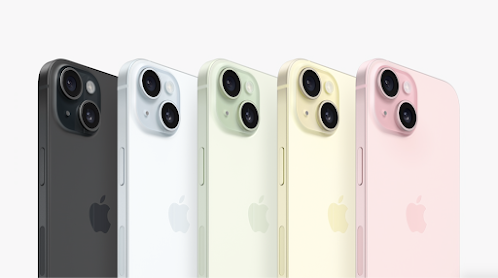
        The smartphone has proven to be an immensely impactful piece of recent technology that has reshaped the very way we communicate with each other. While cellphone technology and long range calls existed before the term “smartphone” was brought to popularity, the smartphone revolutionized the mobile phone industry within a decade of its conception. While the growth of the this technology after its announcement happened relatively rapidly, it took considerably longer for the cell phone to evolve into what we know as the smartphone. The first cell phone was invented in 1973 by Motorola. While the portable cell phone wouldn’t be released until 1984, it did not truly capture the market’s attention in an impactful way. The DynaTAC 8000X was far too clunky, inconvenient and expensive ever reach true popularity, leaving it to be used mostly as a status symbol for those who could afford its steep four-thousand-dollar price tag.


https://sites.bu.edu/cmcs/2018/09/14/the-past-present-and-future-of-smartphone/


        It wasn’t until 1994 that we would see the release of the first rendition of a true smartphone with IBM’s Simon Personal Communicator, more commonly known as the IBM Simon. The IBM Simon boasted an array of new features, such as a touch screen that required a stylus and an LCD screen. This phone was incredibly limited compared to what we know now considering it could only support a battery life of about an hour and only reached 15 states with cell service, but it was an incredible step forward for the industry. The IBM Simon hit the market at a quarter of the price as its predecessor, pushing the smartphone closer and closer to being owned by nearly every adult in the country. The integration of cameras in smartphones in 2000 was the next major leap in smartphone technology.


https://blog.textedly.com/smartphone-history-when-were-smartphones-invented


        The Japanese Sharp J-SHO4 was not only able to incorporate a camera, but also slim the overall model down to weigh just four ounces, beginning the trend of making our smartphones sleek and lightweight. From this point it only took a year for smartphones to be able to access the internet. Today, many people believe that smartphones gained such a name due to their ability to connect to the internet, but in reality cell phones became “smart” before this point back in 1994 with the IBM Simon due to it’s ability to have download apps. The next and arguably most impactful stage in the evolution of the smartphone was in 2007 with Steve Jobs. The introduction of Apple’s iphone completely revolutionized everything we know about the smartphone market. From touch screens to better battery, complete cell coverage potential to the expansion of mobile video games, the iphone destroyed its competitors and sold upwards of 1.4 million units in its first year. The sudden jump in popularity not only solidified Apple as a leading competitor in the world of mobile technology but also outlined just how impactful advancements in the smartphone industry can be. Today, the lives of nearly every American completely rely on mobile technology. Many of the features that Apple has implemented over the years, such as texting, facetiming, proper internet access, storage, camera quality, and far more have become simply an expectation for your everyday person to possess in their everyday lives.


Thursday, January 23, 2025

Post 3

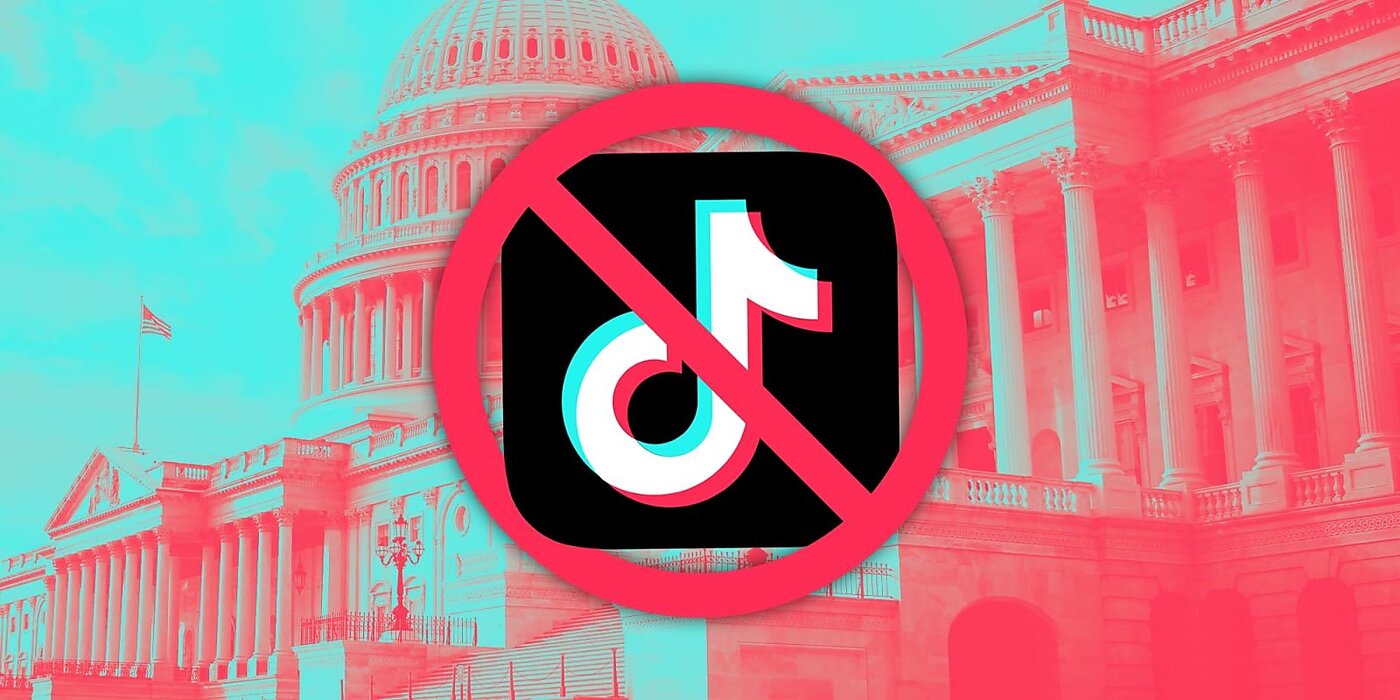
 While I don't personally use tiktok, I can clearly see the danger that is presented when we consider the events that are currently happening surrounding its ban. I may not use tik tok itself, but I do use a number of other social media sites such as Instagram. As someone who is admittedly as obviously reliant as the rest of my peers on mobile technology and internet access, I am not a fan of the concept that our government is able to pick and choose which forms of media are acceptable for its citizens to consume based on its own self interest. By banning a specific social media site, the government sets a precedent that it can do the same to any other as long as it comes up with an acceptable reason. If we follow this line of thought we can see that while the reasoning may be national security now, it could just as easily be any other excuse put forward by people in positions of authority to further an agenda. 

These practices also contradict several of the values of free expression, particularly the marketplace of ideas. The marketplace of ideas is an incredibly important concept to me because I believe that the idea that the best or most deserving ideas will surpass its competitors naturally in a free environment has lots of credibility. No matter how a person defines the success of their idea, when they enter the marketplace of ideas they accept that only the most successful of the lot will come out on top as the best. In order to thrive in an environment such as this, a person is forced to learn to defend their idea and support it against others. When people engage in the market of ideas, they understand that if their idea is to succeed they will need to prove it superior to all others, and all participants strive for the same goal. After all is said and done, the person with the “best” concept will have proven it as such through the process of elimination. 


TikTok being banned in the United States is an example of a contradiction with the marketplace of ideas because TikTok, like every other comparable social media company, has already entered that market as an equal contender. While we may never see a true “best” social media site since different people enjoy different content subjectively, we can use popularity and usage rate as a scale for its success. TikTok has become one of the most commonly used social media apps to date, showing us that it has the ability to rise above its competitors in the market of ideas. By stepping in and forcibly interfering with this company, even going as far as forcing the owners of the product to sell it to another, the government tells us that it does not care about the process of the market of ideas. Because of these actions, the message that the government has sent to its citizens is that it does not truly care about their opportunity to engage in the market, only that the products that serve their best interests are the ones that are made to succeed.


Post 2


  • What did you learn about the Supreme Court that you didn't already know?
I did not know that the first time the court struck down a court struck down an act of congress for being unconstitutional was under John Marshall during Marbury v Madison in 1803. While I knew the court was not always as respected as it is now, I did not know that it took such a long time to gain its reputation.

  • What is the most important take-away point about the Supreme Court?
The supreme court exists to defend the constitution and to ensure that the judicial system is solely responsible for determining the law. Another important takeaway is that when an issue is brought to the supreme court, the court does not have to accept it.
  • What was the most surprising thing you learned?
I was surprised to learn just how complicated the system of communication is between the court and the justices, as well as how much time the justices themselves are given to sway each others opinions while they deliberate.


  • How did the video change the way you thought of the Supreme Court?
I thought that the video went a long way to humanize the supreme court to me. Before I had seen it as more of a strict enforcement of the constitution, but now I see it more as a collection of informed people persuading each other into trying to make appropriate decisions.

Post 1.

 1. ABC News: https://abcnews.go.com/ 

    I like ABC news as a news source because they make a habit of covering both domestic and international stories. While I admittedly care more about the news that is occurring in our own country, it is undeniable that we as citizens need to be aware of the state that the rest of our world is in as well. While it can be argued that ABC news has turned toward left leaning preferences, their stories stand to offer just as many important contrasts to the perspectives of opposing news sources as others.


2. Fox News: https://www.foxnews.com/


    Most of my exposure to fox news comes from my parents having it on every time I go home for break. While fox news is undeniably a right leaning news source, I have found that they provide a good amount of commentary on international and economic events in addition to their political opinions. I think that it is important for people to consume news from multiple different perspectives, and I find that fox news tends to have perspectives that I rarely see on other platforms.


3. Apple News: https://www.apple.com/apple-news/publications/


    While I do not go out of my way to look at the news very often, I find that apple news makes it somewhat easier to navigate since it is easy to use and easy to access. Apple news pulls together stories from various other sources to present to the user based on what it thinks is applicable to them, which I honestly think could be either positive or negative depending on the person. The collection of stories from separate locations has the potential to offer fresh and relevant information on a daily basis


4. The Washington Post: https://www.washingtonpost.com/ 

    The Washington post seems to be a credible/ respected news source that prioritizes in-depth investigative stories, which usually seem to be relevant when they appear. Unfortunately the Washington Post uses a subscription service, making it hard to access sometimes for people like me who do not pay for it.


5. British Broadcasting Corporation: https://www.bbc.com/

    Because the BBC is not located in the United states, they seem to stand the best chance at remaining impartial to American politics. As a non- american entity, they are in a unique position compared to many of the other major news outlets to provide a credible perspective on important issues without being impacted by the influences that sway our own sources. In addition to this, the BBC also gives Americans an interesting lens to view the events of Europe and the rest of the world through. 


Post 9

  Confirmation bias is the psychological event in which our subconscious tends to seek out or remember information that confirms a belief th...